
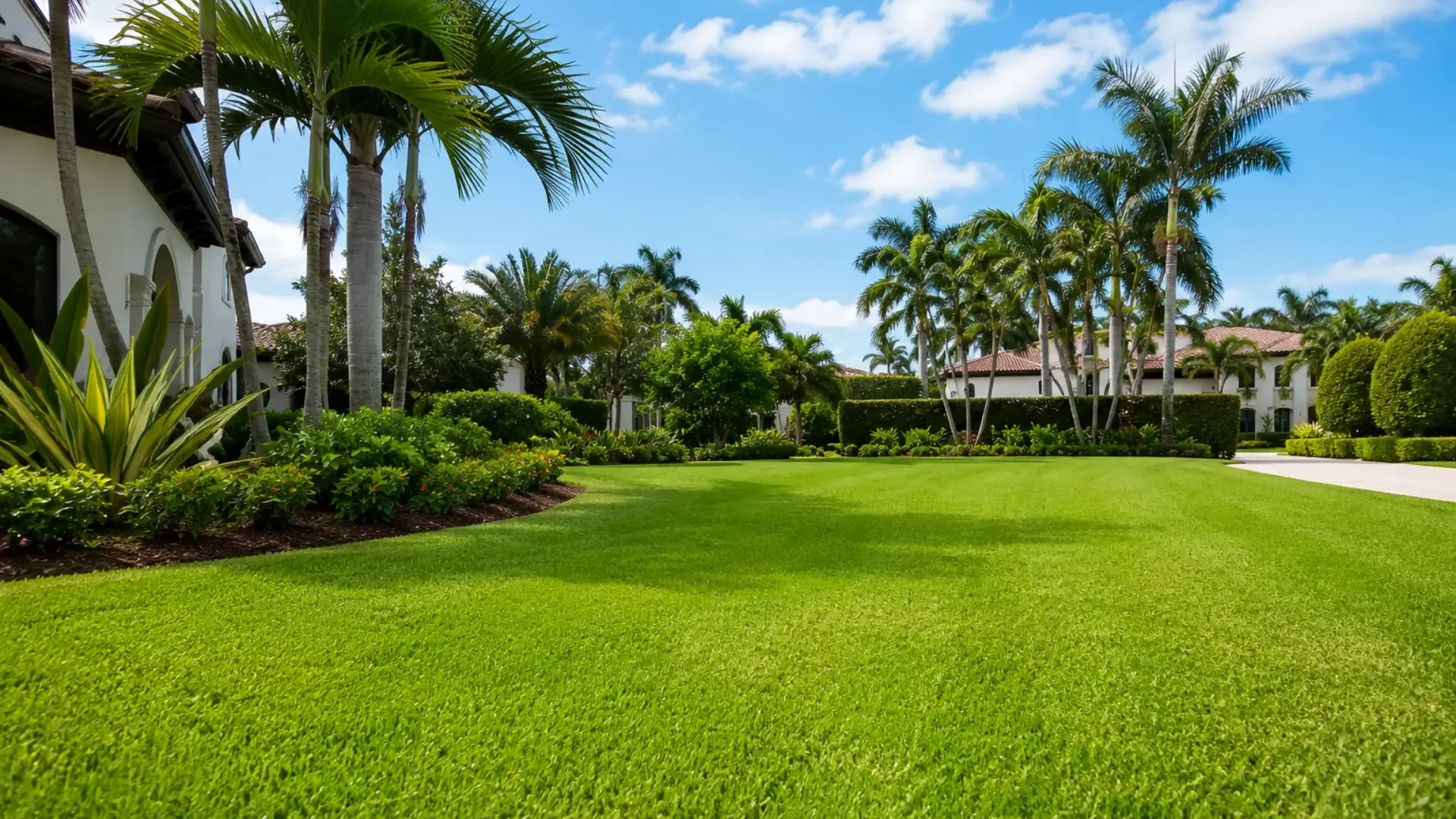
Tackling Commercial Lawn Maintenance Challenges During Florida’s Summer Heat
Florida summers put every landscape to the test. Between intense sun, heavy afternoon rain, high humidity, fast turf growth, and tropical storm activity, lawns can quickly go from healthy to stressed. For property owners, commercial lawn maintenance becomes more than a routine service. It becomes part of protecting curb appeal, safety, and property value.
In South Florida, landscapes need care that fits the climate. The Green Shape works with commercial and residential properties across Miami, Fort Lauderdale, West Palm Beach, Palm Beach, Broward, and Miami-Dade, where summer lawn care requires local expertise and consistent attention.
Why Commercial Lawn Maintenance Gets Harder in The Summer
Commercial lawn maintenance is especially demanding during the summer because Florida’s growing season is active and unpredictable. Grass grows quickly after rain, but heat stress can still cause thinning, browning, and weak root systems. Humidity can also create conditions where weeds and pests spread quickly.
For commercial properties, the challenge is not only keeping grass green. A poorly maintained lawn can affect first impressions, create uneven walking areas, and make a property look neglected. For residential properties, summer heat can lead to patchy turf, overgrown edges, and irrigation concerns that are difficult to correct without a plan.
The best approach is consistent, climate-aware care that adjusts to rainfall, soil conditions, turf type, and how the property is used.
Managing Irrigation Without Overwatering
One of the biggest summer mistakes is assuming more water is always better. Florida lawns need water, but overwatering can weaken turf and waste resources. Heavy rain can also hide irrigation problems because a lawn may look wet on the surface while some zones still receive poor coverage.
Lawn maintenance should include irrigation checks during the summer. Sprinkler heads can shift, break, clog, or spray pavement instead of turf. Controllers may also need seasonal adjustments as rainfall patterns change.
For properties with larger grounds, irrigation should be reviewed by zone. Sunny turf near parking lots may dry faster than shaded areas near buildings. Sloped sections may drain quickly, while low areas may stay wet too long. Matching water use to real site conditions helps support healthier growth through the hottest months.
Mowing for Heat-Stressed Turf
Mowing is not just about appearance. During Florida’s summer heat, mowing height and frequency can affect turf health. Cutting grass too short can expose soil, stress roots, and make it easier for weeds to move in. Waiting too long between cuts can lead to clumping, uneven growth, and a rougher look after service.
Lawn maintenance during summer often calls for a regular mowing schedule that keeps turf neat without putting unnecessary stress on the lawn. Sharp blades are also important because dull blades tear grass instead of cutting cleanly. Torn turf can look brown at the tips and may be more vulnerable during humid weather.
On busy commercial sites, timing also counts. Mowing should fit the property’s traffic patterns when possible, especially around entrances, walkways, courtyards, and customer-facing areas.
Drainage, Storm Prep, and Debris Control
Florida summer often brings sudden downpours. When drainage is poor, lawns can develop standing water, washed-out mulch, exposed roots, and muddy sections near sidewalks or parking areas. These issues can affect both appearance and access.
Commercial lawn maintenance should include regular attention to drainage patterns. After heavy rain, property owners may notice low spots, areas where turf is thinning, or places where water runs across walkways. Addressing these signs early can help reduce bigger landscape repairs later.
Storm-season cleanup is also part of keeping a property presentable. Palm fronds, branches, leaves, and other debris can collect quickly after summer weather. Routine cleanup helps outdoor spaces look cared for and keeps entry areas, paths, and gathering spaces easier to use.
Weeds, Pests, and Disease Pressure
Heat and moisture create prime conditions for weeds, insects, and turf disease. A lawn that looked strong in spring may begin showing yellow patches, thinning areas, or uneven color as summer progresses.
Lawn maintenance should include observation, not just mowing. Changes in turf color, texture, density, and soil moisture can point to problems that need attention. For larger commercial and residential properties, early identification is valuable because lawn problems can spread across wide areas quickly.
Sustainable landscape management also plays a role. Proper mowing, irrigation, trimming, and plant care support stronger turf and reduce stress across the landscape.
FAQ
How often should I schedule commercial lawn maintenance?
Most active properties need regular maintenance during the summer because turf grows quickly in heat and rain. The right schedule depends on grass type, property use, irrigation, and recent weather.
Can commercial lawn maintenance help with brown patches during summer?
Yes, it can help identify likely causes of brown patches, such as irrigation coverage issues, heat stress, pests, disease, or mowing height. A site review helps guide the next step.
Do residential properties need the same summer lawn care as commercial properties?
Residential properties may need many of the same services, including mowing, irrigation checks, trimming, and storm cleanup. The main difference is scale, traffic, and the level of detail needed for the site.
Why is irrigation so important for Florida summer landscaping?
Irrigation is important because summer lawns deal with heat, rain swings, and fast growth. A well-managed system helps turf receive the right amount of water without creating soggy or dry zones.
Want to Know More?
South Florida summer can be hard on any property, but the right plan can keep your landscape looking cared for through heat, rain, and storm season. Contact The Green Shape to discuss commercial lawn maintenance for your commercial or residential property.